Backup Interceptor Control (BUIC, ) was the Electronic Systems Division 416M System to backup the SAGE 416L System in the United States and Canada. BUIC deployed Cold War command, control, and coordination systems to SAGE radar stations to create dispersed NORAD Control Centers. == Background == Prior to the SAGE Direction Centers becoming operational, the USAF deployed data link systems at NORAD Control Centers with ground computers for controlling crewed interceptors. After SAGE IBM AN/FSQ-7 Combat Direction Centrals became operational and the Super Combat Centers with improved (digital) computers were cancelled, a backup to SAGE was planned in the event the above-ground SAGE Air Defense Direction Center failed. == General Electric AN/GPA-37 Course Directing Group == BUIC began with deployment of General Electric AN/GPA-37 Course Directing Groups to several Long Range Radar stations. Units designated included the "U.S. Air Force 858th Air Defense Group (BUIC) [which became] a permanent operating facility" at Naval Air Station Fallon in Nevada. == BUIC II == BUIC II was used to command and control sites using the Burroughs AN/GSA-51 Radar Course Directing Group. North Truro AFS became the first ADC installation configured for BUIC II. == BUIC III == The AN/GYK-19 (initially AN/GSA-51A) was an upgraded version of the BUIC II system designated AN/GSA-51A and required a larger building than the AN/GSA-51. The first BUIC III site was Fort Fisher AFS, and Air Defense Command's was first installed at Fort Fisher Air Force Station, North Carolina. Although more advanced systems were contemplated, the final design of the BUIC III system was an upgraded version of the BUIC II with around twice the performance. == Closure and upgrade == In 1972, the USAF decided to shut down most of the BUIC sites; most of the sites mothballed by 1974, except for the BUIC III site at Tyndall Air Force Base. In Canada the BUIC site at Senneterre was shut down, but St Margarets remained open. The remaining sites were closed between 1983-1984 when SAGE was replaced by the Joint Surveillance System. The AN/FYQ-47 Common Digitizer for the Joint Surveillance System, and the Radar Video Data Processor (RVDP) was a combined system for the Air Force and Federal Aviation Administration (FAA), it replaced the SAGE Burroughs AN/FST-2 Coordinate Data Transmitting Sets.
Cryptee
Cryptee is a privacy focused client-side encrypted and cross-platform productivity suite and data storage service. == History == Cryptee was founded in 2017, by John Ozbay, a cybersecurity researcher, commenter, and activist, to exclusively focus on providing a secure document editing service similar to Google Docs and Photos for everyone, with a particular focus on victims and survivors of domestic abuse, journalists and reporters. == Software == Users can write personal documents, notes, journals, store images, videos, and various kinds of other files. The source code of Cryptee is open source and publicly available to allow anyone to audit the service with ease, and help identify errors or potential vulnerabilities in a public and transparent manner. Cryptee has a few key features that differentiate it from other services in the industry, such as its Ghost Folders and Ghost Albums features, built specifically with victims and survivors of domestic abuse, journalists and reporters in mind. Cryptee allows users to hide (ghost) folders for plausible deniability also as known as deniable encryption in the field of cryptography and steganography, and ensure privacy even under coercion. === Features === Cryptee Docs' features include: To-do lists, Markdown support, KaTeX math and file attachments. cross-platform accessible, as it is a progressive web app. Bulk transfer from other note taking apps such as Evernote. Encrypted PDF and print-accurate (A4 and U.S. Letter paper-sized) text editing. Ability to edit docx files Cryptee Photos' features include: Ability to create slideshows. Ability to store original quality of photos. Ability to tag photos for organization. === Commercial strategy === The company's commercial strategy is focused on offering to its users an open source and transparent Photo Storage, Document Editor and Cloud Storage services without trackers or advertisements as it seeks to compete with Google Docs, Google Photos and similar services through its offerings. === Privacy === Cryptee utilizes zero-access storage to safe-keep all users' sensitive digital belongings. == Advocacy == === Lockdown mode === In July 2022, to fortify iPhones against the Pegasus Spyware, Apple announced a new, upcoming Lockdown Mode feature in iOS 16, welcomed by many experts. In the following weeks after Apple's announcement, in August 2022, the Founder and CEO of Cryptee, and privacy activist John Ozbay published their research detailing shortcoming of Apple's Lockdown Mode. They demonstrated that enabling Lockdown Mode makes it possible for all websites and online ads to be able to detect if users have Lockdown Mode enabled or not. This was due to the fact that disabling web fonts (an attack surface) was detectable by websites. === Confrontations against Apple === ==== On PWAs ==== In February 2024, Apple announced plans to kill progressive web apps on iOS devices in the EU, claiming it was to comply with the Digital Markets Act (DMA). The announcement was criticized as anti-competitive by many in the tech industry, including by Tim Sweeney, the CEO of Epic Games. In response, Cryptee started working together with Open Web Advocacy (OWA), an international not-for-profit digital rights group to advocate for the future of the open web, promote web browser choice on mobile operating systems through challenging Apple's anti-competitive third party browser engine ban, and to champion the use and equality of progressive web apps over native apps, by reaching out to the European Union's Digital Markets Act (DMA) team. To better understand the consequences of Apple's decision to kill web apps, the EU announced that they "seek to investigate Apple over cutting off web apps", and that they sent "requests for information to Apple and to app developers, who can provide useful information for our assessment". Apart from sending a response to the EU, Cryptee, along with the OWA, launched an open letter to Tim Cook, which in 48 hours, got thousands of signatories including European Parliament Members Karen Melchior and Patrick Breyer; and thousands of other developers and organizations from over 100 countries. Consequently, 24 hours later, Apple backed off, and reversed course on its plan to cut off progressive web apps in the EU. ==== Ozbay's representations ==== Following the events, eventually on March 18, 2024, Founder and CEO of Cryptee John Ozbay represented the Open Web Advocacy group in European Union's Digital Markets Act (DMA) hearing for Apple. At the hearing, OWA confronted Apple, accused Apple of "maliciously intending to undermine user choice", and stated that there was no defense for Apple's behavior. In response, according to the tech news outlet Ars Technica, Apple's spokesperson "seemed to dodge Ozbay's question". ==== Cooperation with the EU ==== Within a week of the hearing, the European Union announced a DMA non-compliance investigation against Apple and United States' Department of Justice filed an antitrust lawsuit against Apple. A few months later, on June 27, 2024, Cryptee, in cooperation with EDRi — an international advocacy group, along with Article 19 — a British international human rights organization, Privacy International, F-Droid, Free Software Foundation Europe, Guardian Project and others have submitted a comprehensive analysis to the European Commission about how Apple's plans to comply with the Digital Markets Act are insufficient. == Reviews == In a 2018 article, Wall Street Journal's MarketWatch reviewed Cryptee, articulating the fact that Cryptee offers zero-access storage for photos, files, documents and notes, and pointed out that: "Being based in Estonia puts Cryptee outside the “14 eyes jurisdiction,” an international surveillance alliance of European Union and North American countries, making it less likely it will be targeted with demands for data". In addition, the review highlighted Cryptee's Ghost Folders feature which ensures privacy even under coercion. In a 2019 article, Reclaim The Net named Cryptee as one of the "5 great privacy-focused Evernote alternatives to keep your notes safe", underlining that: "When it comes to security, this app is state of the art." and that "When making this app, the developers thought about every aspect of security and have taken every precaution to make it as secure as possible.". The review further underscored Cryptee's open-source nature, its strong encryption, and easy migration features. In a 2021 article, The Verge reviewed Cryptee, pointing out that Cryptee, based out of Europe, is one of the main photo storage service alternatives to Google Photos, and that it's their recommendation for users who are "concerned about privacy and like the idea of encryption" as Cryptee "offers to keep all your photos encrypted using AES-256". In a 2024 article, Beebom, enlisted Cryptee as one of the "7 best iCloud Photos Alternatives for iPhone and iPad", complimenting Cryptee's simplicity, its use of encryption to safeguard users' photos against hacking by not storing any unencrypted data. The article also provided further attention to Cryptee's additional features such as such as Ghost Albums, slideshows, easy-to-use drag and drop uploads, tagging and users' ability to store original-quality photos on Cryptee, concluding that Cryptee is "a safe bet if you are on the lookout for a privacy-centric iCloud Photos alternative".
Personoid
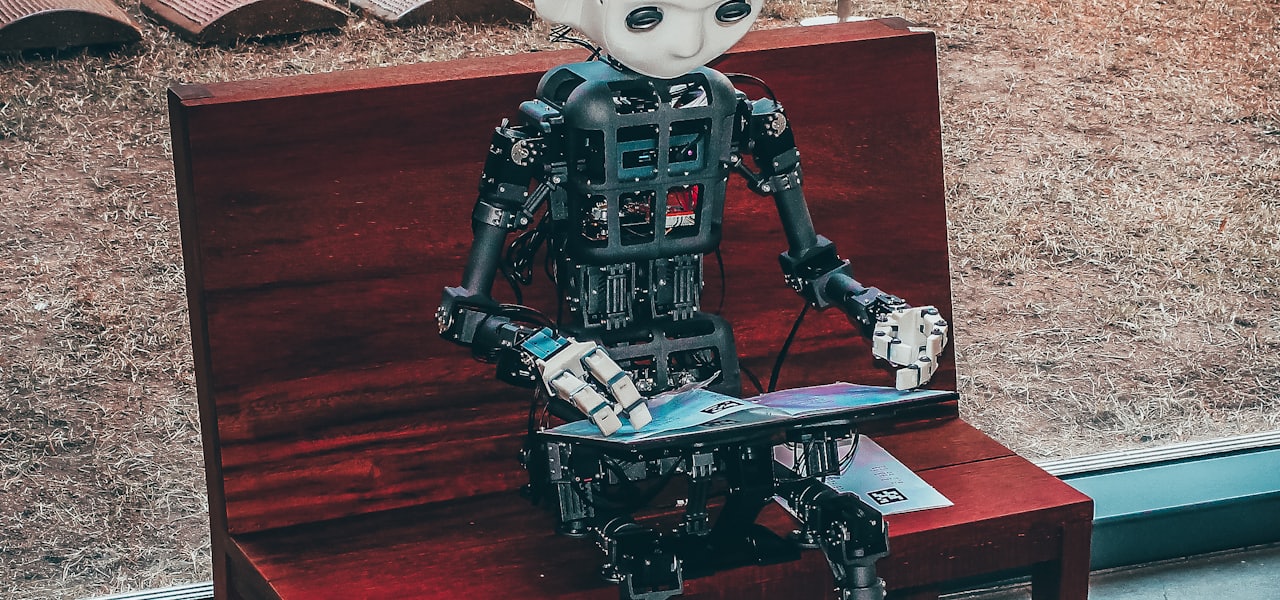
Personoid is the concept coined by Stanisław Lem, a Polish science-fiction writer, in Non Serviam, from his book A Perfect Vacuum (1971). His personoids are an abstraction of functions of human mind and they live in computers; they do not need any human-like physical body. In cognitive and software modeling, personoid is a research approach to the development of intelligent autonomous agents. In frame of the IPK (Information, Preferences, Knowledge) architecture, it is a framework of abstract intelligent agent with a cognitive and structural intelligence. It can be seen as an essence of high intelligent entities. From the philosophical and systemics perspectives, personoid societies can also be seen as the carriers of a culture. According to N. Gessler, the personoids study can be a base for the research on artificial culture and culture evolution. == Personoids on TV and cinema == Welt am Draht (1973) The Thirteenth Floor (1999)
AI Overviews
AI Overviews is an artificial intelligence (AI) feature integrated into Google Search that produces AI-generated summaries of search results. The feature has been criticized for its inaccuracy and for reducing website traffic. == History and development == AI Overviews were first introduced as part of Google's Search Generative Experience (SGE), which was unveiled at the Google I/O conference in May 2023. In May 2024 at Google I/O 2024, the feature was rebranded as AI Overviews and launched in the United States. The introduction of AI Overviews was seen as a strategic move to compete with other generative AI advancements, including OpenAI's ChatGPT. By August 2024, AI Overviews was rolled out to several other countries, including the United Kingdom, India, Japan, Brazil, Mexico, and Indonesia, with support for multiple languages. In October 2024, Google expanded the feature globally, making it available in over 100 countries. In December 2024, Botify x Demandsphere released findings stating that when AI Overviews and featured snippets appear together on the search engine results page, they take up approximately 67.1% of the screen on desktop and 75.7% on mobile. Even if content is ranking in the #1 position, it may not be visible to consumers if other visual elements on the results page are more prominent. In March 2025, Google started testing an "AI Mode", where the search results page is AI-generated. The company was also considering adding advertisements to the AI Mode, as they already exist in AI Overviews. As of May 2025, AI Overviews are available in over 200 countries and territories and in more than 40 languages. As of March 2026, Google AI Overviews appear on more than 48% of total Google Search queries, compared to just 6.49% in the previous year (58% year-over-year growth). == Functionality == The AI Overviews feature uses large language models to generate summaries from web content. The overviews are designed to be concise, providing a snapshot of relevant information about the queried topic. Google allows users to adjust the language complexity in summaries, offering both simplified and detailed options. The overviews also include links to sources. According to a June 2025 study by Semrush, the most cited source is Quora, followed by Reddit. == Reception == The feature has faced criticism for inaccuracies, including instances where erroneous or nonsensical content was generated. Depending on what is searched for, the overview may also consist of hallucinated content, such as when searching for idioms that do not exist. In May 2024, Google temporarily restricted the AI tool after it provided suggestions that were seen as nonsensical and harmful, such as telling users to eat rocks or apply glue on pizza. Concerns were also raised by content publishers, who feared a decline in web traffic as users relied on the summaries instead of visiting source websites. A Google patent from 2026 raised the concern of webmasters that Google could entirely replace the landing page of websites by an AI optimized copy of the website in its results. There is also apprehension about the ethical implications of AI-driven content aggregation, including its impact on intellectual property rights and the visibility of smaller content providers. The European Commission announced in December 2025 that they were investigating whether AI Overviews breached European competition law. In response, Google has stated its commitment to improve content validation and refine the algorithms used to filter unreliable information. Google implemented measures to prioritize link placement within AI Overviews, aiming to balance user convenience with the needs of content creators. In January 2026, Google restricted AI Overviews on certain health-related searches following an investigation by The Guardian. == Lawsuits == On February 24, 2025, Chegg sued Alphabet over the AI Overviews feature, claiming that it was leading to students preferring "low-quality, unverified AI summaries", thus violating antitrust law. Chegg also said it was considering either a sale or a take-private transaction. In September 2025, Penske Media Corporation, the publisher of Rolling Stone and The Hollywood Reporter, sued Google, claiming that AI Overviews illegally regurgitate content from their websites and drive off potential site visitors by always appearing on top of the search results while leaving little incentive to see the linked sources. The company stated that "the future of digital media and [...] its integrity [...] is threatened by Google's current actions", alleging that 20% of searches that link to Penske-owned websites show AI Overviews and that the figure is expected to rise. Google spokesperson José Castañeda called the claims "meritless" and stated that "AI Overviews send traffic to a greater diversity of sites." In 2026, Canadian musician Ashley MacIsaac filed a lawsuit against Google claiming that the AI Overview feature had wrongly stated that MacIsaac had been convicted of numerous criminal offences and was on the sex offender registry. He claims this incorrect information led to the cancellation of a December 2025 gig organized by the Sipekne'katik First Nation.
H2O (software)
H2O is an open-source, in-memory, distributed machine learning and predictive analytics platform developed by the company H2O.ai (previously 0xdata). The software uses a distributed architecture for parallel processing on standard hardware. It supports algorithms for large-scale data analysis and model deployment. H2O is primarily used by data scientists and developers for statistical modeling and data-driven decision-making. The platform is designed to handle in-memory computations across a distributed computing environment. It offers implementations for numerous statistical and machine learning algorithms, which are accessible through various programming interfaces. The software is released under the Apache License 2.0. == Functionality and features == H2O provides a suite of supervised and unsupervised machine learning algorithms. Its core functions include: Supervised learning: algorithms in the field of statistics, data mining and machine learning such as generalized linear models, random forests, gradient boosting and deep learning are implemented for classification and regression tasks. Unsupervised learning: including K-Means clustering and principal component analysis. Automated machine learning: a features designed to automate the processes of model selection, tuning, and ensemble creation. The software can ingest data from various sources, including the Hadoop Distributed File System, Amazon S3, SQL databases, as well as local file systems. It operates natively on Apache Spark clusters through Sparkling Water. Proponents claim that improved performance is achieved compared to other analysis tools. The software is distributed free of charge, under a business model based on the development of individual applications and support. == Architecture == H2O is primarily written in Java. It uses a distributed architecture that allows the platform to cluster nodes for parallel processing and in-memory storage of data and models. Users interact with the H2O platform through several primary interfaces: Programming language interfaces: APIs are provided for the R and Python programming languages, and various Apache offerings (Apache Hadoop and Spark, as well as Maven). H2O Flow: a graphical web-based interactive computational environment that functions as a notebook interface for data exploration, model building, and scripting. REST-API: allows for integration with other applications and frameworks such as Microsoft Excel or RStudio. With the H2O Machine Learning Integration Nodes, KNIME offers algorithmic workflows. While the algorithm executes, approximate results are displayed, so that users can track the progress and intervene if needed. == History, influences, and extensions == The software project was initiated by the company 0xdata, which later changed its name to H2O.ai. The three Stanford professors Stephen P. Boyd, Robert Tibshirani and Trevor Hastie form a panel that advises H2O on scientific issues. Since its inception, H2O provides open-source machine learning libraries for enterprise use. The core H2O platform is often complemented by offerings from H2O.ai, such as H2O Driverless AI. == Reception == H2O is referenced in peer-reviewed literature regarding automated machine learning (AutoML). The platform has been categorized as a "Leader" and a "Strong Performer" in industry reports by Forrester Research. H2O (the open-source platform) and the associated commercial platform Driverless AI have been recurring winners of InfoWorld's most prestigious awards, including both the Best of Open Source Software ("Bossies") and the Technology of the Year awards.
Universal psychometrics
Universal psychometrics encompasses psychometrics instruments that could measure the psychological properties of any intelligent agent. Up until the early 21st century, psychometrics relied heavily on psychological tests that require the subject to cooperate and answer questions, the most famous example being an intelligence test. Such methods are only applicable to the measurement of human psychological properties. As a result, some researchers have proposed the idea of universal psychometrics - they suggest developing testing methods that allow for the measurement of non-human entities' psychological properties. For example, it has been suggested that the Turing test is a form of universal psychometrics. This test involves having testers (without any foreknowledge) attempt to distinguish a human from a machine by interacting with both (while not being to see either individuals). It is supposed that if the machine is equally intelligent to a human, the testers will not be able to distinguish between the two, i.e., their guesses will not be better than chance. Thus, Turing test could measure the intelligence (a psychological variable) of an AI. Other instruments proposed for universal psychometrics include reinforcement learning and measuring the ability to predict complexity.
Space-based data center
Space-based data centers or orbital AI infrastructure are proposed concepts to build AI data centers in the sun-synchronous orbit or other orbits utilizing space-based solar power. Electric power has become the main bottleneck for terrestrial AI infrastructure. Space-based edge computing has historical roots in military architectures designed to bypass the latency of ground-based targeting networks. In the 1980s, the Strategic Defense Initiative's Brilliant Pebbles program first envisioned autonomous on-orbit data processing for missile defense. In 2019, the Space Development Agency (SDA) began to revive this decentralized approach through its Proliferated Warfighter Space Architecture (PWSA). This ambitious "sensor-to-shooter" infrastructure is treated as a prerequisite for the modern Golden Dome program, which would rely on space-based data processing to continuously track targets. == History == Early thinking about space-based computing infrastructure grew out of mid-20th-century visions for large orbital industrial systems, most notably proposals for space-based solar power, which were popularized in both technical literature and science writing by figures such as Isaac Asimov in the 1940s. These ideas emphasized exploiting the vacuum, continuous solar energy, and thermal characteristics of space to support power-intensive activities that would be difficult or inefficient on Earth. In the 21st century, advances in small satellites, reusable launch vehicles, and high-performance computing revived interest in space-based data centers, with governments and private companies exploring orbital or near-space platforms for edge computing, secure data handling, and low-latency processing of Earth-observation data. In September 2024, Y Combinator-backed Starcloud released a white paper detailing plans to build multiple gigawatts of AI compute in orbit. It was the first widely cited proposal to actually start building large orbital data centers. In 2025, Starcloud deployed an NVIDIA H100-class system and became the first company to train an LLM in space and run a version of Google Gemini in space. In March 2025, Lonestar deployed a data backup machine on the surface of the moon. In early January 2026, a team from the University of Pennsylvania presented a tether-based architecture for orbital data centers at the AIAA SciTech conference. The design relied on gravity gradient tension and solar-pressure-based passive attitude stabilization to minimize the mass of MW-scale orbital data centers. In January 2026, SpaceX filed plans with the Federal Communications Commission (FCC) for millions of satellites, leveraging reusable launches and Starlink integration to extend cloud and AI computing into orbit. Around the same time, Blue Origin announced the TeraWave constellation of about 5,400 satellites, designed to provide high‑throughput networking for data centers, enterprise, and government customers. Meanwhile, China announced a 200,000‑satellite constellation, focusing on state coordination, data sovereignty, and in-orbit processing for secure, time-critical applications. In February 2026, Starcloud submitted a proposal to the FCC for a constellation of up to 88,000 satellites for orbital data centers. In March, it announced intentions to be the first to mine Bitcoin in space, flying bitcoin mining ASICs on its second satellite, Starcloud-2. In May 2026, Edge Aerospace was awarded a contract by the European Space Agency under its Space Cloud program to study use cases, architectures and implementation roadmap for orbital data centers. == Feasibility == In October 2025, Nature Electronics published a study led by a research group at Nanyang Technological University on the development of carbon-neutral data centres in space. In November 2025, Google published a feasibility study on space-based data centers. The authors argued that if launch costs to low earth orbit reached US$200/kg, the launch cost for data center satellites could be cost effective relative to current energy costs for ground-based data centers. They project this may occur around 2035 if SpaceX's Starship project scales to 180 launches/year by then. == Advantages == Some sun-synchronous orbit (SSO) planes have constant sunlight in the dawn/dusk which could provide continuous solar energy. SSO is a limited resource and proper management and sharing of it is required. Solar irradiance is 36% higher in Earth orbit than on the surface No Earth weather storms or clouds, however more exposed to Solar storms. No property tax or land-use regulation. Saves space for other land use. Ample space for scalability. Won't strain the power grid. Direct access to power source without additional infrastructure. == Disadvantages == The deployment of space-based data centers raises several technical, economic, and environmental concerns. Existing launch costs are substantial and remains main cost of space infrastructure deployment Cooling is limited to heat dissipation through radiation only, which made in inefficient in comparison to convection in terrestrial data centers Space infrastructure must be designed to survive launch and to work under environment conditions of radiation, wide range of temperatures, in vacuum and in microgravity In-space assembly is on early development stage to enable deployment of mega-structures Megastructures are particularly exposed to orbital debris Solar arrays efficiency decrease 0.5% to 0.8% per year due to exposure of ultraviolet rays, space weather and orbital thermal cycles Hardware is designed for limited lifespan. Maintenance and repair in space (known as On-Orbit Servicing (OOS)) is still on early stage of practical implementation. Disposable data centre: technology obsolescence of AI data centre being a concern and difficult maintenance in space imply the single-use purpose of those space data centres. To extend lifetime, space infrastructure will require either refueling or orbit rasie by the servicer, which is going to increase its operational costs The environmental impact on Earth has its own challenges: The environmental impact of launches need to be addressed. Deployment consumes Earth resources that cannot be recovered or recycled. Computers require lots of resources, some of which are strategic. Recycling e-waste is already a challenge on Earth and extremely unlikely in space. Space debris (orbit pollution) is another sustainability challenge for space: Orbits are, like any resources, a limited physical and electromagnetic resource and available for all mankind. The accumulation of satellites on a particular orbit reduces the use of space for other purposes. A consequence of the increase of satellite in orbit is a higher risk of the runaway of space debris (see Kessler syndrome). This means some orbits could become unusable. Latency and bandwidth are constrained in space, and consumes limited electromagnetic resources. Satellite flares could inhibit ground-based and space-based observational astronomy. == Size and power generated == It would take ~1 square mile solar array in earth orbit to produce 1 gigawatt of power at 30% cell efficiency. == Companies pursuing space-based AI infrastructure == Blue Origin Cowboy Space Corporation (formerly Aetherflux) Edge Aerospace Google – Project Suncatcher Nvidia OpenAI SpaceX Starcloud